
Grant County Recent Arrest Routes
Start with the Grant County Sheriff's Office, whose public page lists prisoner transport and central records among its duties. No jail roster appears there. So where does an arrestee go? A 2024 regional jail study gives the reason. The Minnesota Department of Corrections says Grant County has no jail. Until the sheriff identifies the receiving facility, no outside roster deserves the name "Grant County Jail roster."
The record trail splits at transport. The sheriff may hold the incident number, arrest time, place, and legal basis. The receiving jail holds the rest. That means intake time, booking number, bond status, and any booking photograph. Case records come separately through Minnesota Court Records Online, which may show a filed case. Each system covers one stage. A gap in one does not cancel another.
| Time window | Starting source | What it can establish |
|---|---|---|
| Same day | Arrests Last 24 Hours | Sheriff contact and receiving-facility verification when no county feed exists |
| Several days or a week | Police Blotter | Official requests plus the delayed Herald activity-report trail |
| Ongoing custody | VINELink Custody Check | Status or alerts when the receiving jail participates and has entered the person |
Why Grant Arrests Split
Grant County's lack of a jail shapes every search. Minnesota law allows commitment to a sufficient jail in another county when none exists locally. The transport destination matters more than a broad web search. That single fact explains most dead ends. Ask the sheriff which agency made the arrest. Ask where the person went, when transfer occurred, and which office now keeps the booking record. Never guess the receiving jail from a search result. Do not rely on the nearest city or an old news item.
Timing complicates things. A just-arrested person may not appear anywhere while transport and intake are underway. Once booked, the entry may sit under the receiving county. A live roster line can vanish after release. The sheriff's arrest data, the jail's booking record, and any court case remain. A prison sentence shifts the search again. Then the Minnesota DOC viewer becomes the system to check. One name search can return several results that look inconsistent but are not.
The Minnesota regional jail study documents the no-jail finding. It is a structural fact. It is not an arrest count or a safety ranking. Reported incidents, bookings, arrests, and city population measure different things.
Grant County Roster Alternative
Grant County publishes no public custody roster. A short identification process takes its place. Call the Grant County Sheriff with details that narrow the event: the person's name, rough arrest time, place, and the agency you believe was involved. Ask for the current custodian. Skip the assumption of a "Grant County Jail." Once an official source names a receiving facility, use that facility's own roster or records office.
| Search detail | Why it matters |
|---|---|
| Full name and birth date | Separates people with similar names |
| Arrest date, time, and place | Narrows the sheriff’s event record |
| Originating agency | Identifies who holds the arrest data |
| Receiving facility | Points to the booking and live-custody record |
| Booking or incident number | Supports a precise follow-up request |
| Release or transfer status | Explains why a roster result may have vanished |
Use the following order to avoid a wrong-county match:
- Confirm the arresting agency with the sheriff or cited official report.
- Ask which facility accepted the person and when transport occurred.
- Search only the named facility’s official roster, if one is offered.
- Use Minnesota VINE as a second custody check, not proof that every arrest was entered.
- Request arrest and booking records from their respective custodians when online results are absent.
VINELink’s Minnesota search screen shows why the correct state and facility context matter.

The screen supports a person-specific custody check. It is not a Grant County booking feed, though, and it may miss someone still in transport before intake.
Where Grant Arrest Records Appear
Official sources come first. The sheriff identifies the event. It also names the receiving custodian. The receiving jail maintains the booking record and photo. Courts add later case context, while the Minnesota DOC viewer covers people in prison or under supervision. Local news is not a record, just chronology. Third-party pages serve only as leads and often hold stale, incomplete, or wrong-jurisdiction material.
| Channel | Official? | Photo? | Best use |
|---|---|---|---|
| Grant County Sheriff | Yes | By request if held and public | Arrest data and receiving-facility identity |
| Receiving facility | Yes | Policy varies | Booking, custody, transfer, and release details |
| Minnesota courts | Yes | No booking gallery | Filed case, hearings, and disposition |
| Minnesota DOC | Yes | No public photo field verified | State sentence or supervision, not a fresh arrest |
| Grant County Herald | No, local journalism | Not a booking source | Delayed weekly activity reports |
| Mugshots.com local path | No | May republish images | Unofficial lead only; verify all details |
The Minnesota Data Practices Office overview sorts it out. It explains how the state classifies arrest data, booking photos, active investigations, and protected identities.
The overview separates public arrest fields from narratives or identities that remain protected.
Grant County Arrest Record Fields
Minnesota Statutes section 13.82 makes listed arrest data public. The data lives at the agency that created it. The list is wider than name and charge. It can expose the custody trail when Grant County transports someone out. Ask for existing data only. The county need not build a roster it never keeps.
| Public field | What it may show |
|---|---|
| Time, date, and place | When and where custody began |
| Officer action | The recorded enforcement action |
| Resistance and weapons data | Facts maintained in the statutory list |
| Charge or legal basis | The charge or authority recorded at arrest |
| Place held | The custodian after transport |
| Transfer details | Date, time, and recipient of transfer |
| Release details | Date, time, and legal basis for release |
Not everything opens up at once. Active investigative data and protected identities stay closed even when other fields are public. A booking photograph is generally public under subdivision 26. An agency may withhold it briefly if release would harm an active investigation. Juvenile images face separate limits. A denial should cite its legal basis, and a requester can narrow the ask to fields already public.
Request Grant County Arrest Data
The Grant County Public Data Request Policy requires a clear description of the data you want. The county will not create new records. Inspection is the smart first step. Minnesota law allows free inspection of public government data. Copies and certain retrieval work can still carry costs.
- Define the event by name, date range, location, and originating agency.
- Ask for the report number, public arrest fields, transport destination, and transfer or release data.
- Request a releasable booking photo only if the sheriff holds one; otherwise ask who does.
- Inspect responsive public data first when practical, then order needed copies.
- Send a separate request to the receiving jail for booking, custody, and release data.
Minnesota law caps many paper-copy fees. The policy cites 25 cents for a one-sided page. Two-sided pages run 50 cents on small jobs. Larger requests can add search, retrieval, copying, transmission, or outside-vendor photo costs. Those figures are examples, not a flat rate for every arrest record. Keep dates and fields narrow. That makes any cost far easier to price. For the legal background, see Minnesota Statutes section 13.82. It covers arrest data, photos, investigations, identity, and warrants.
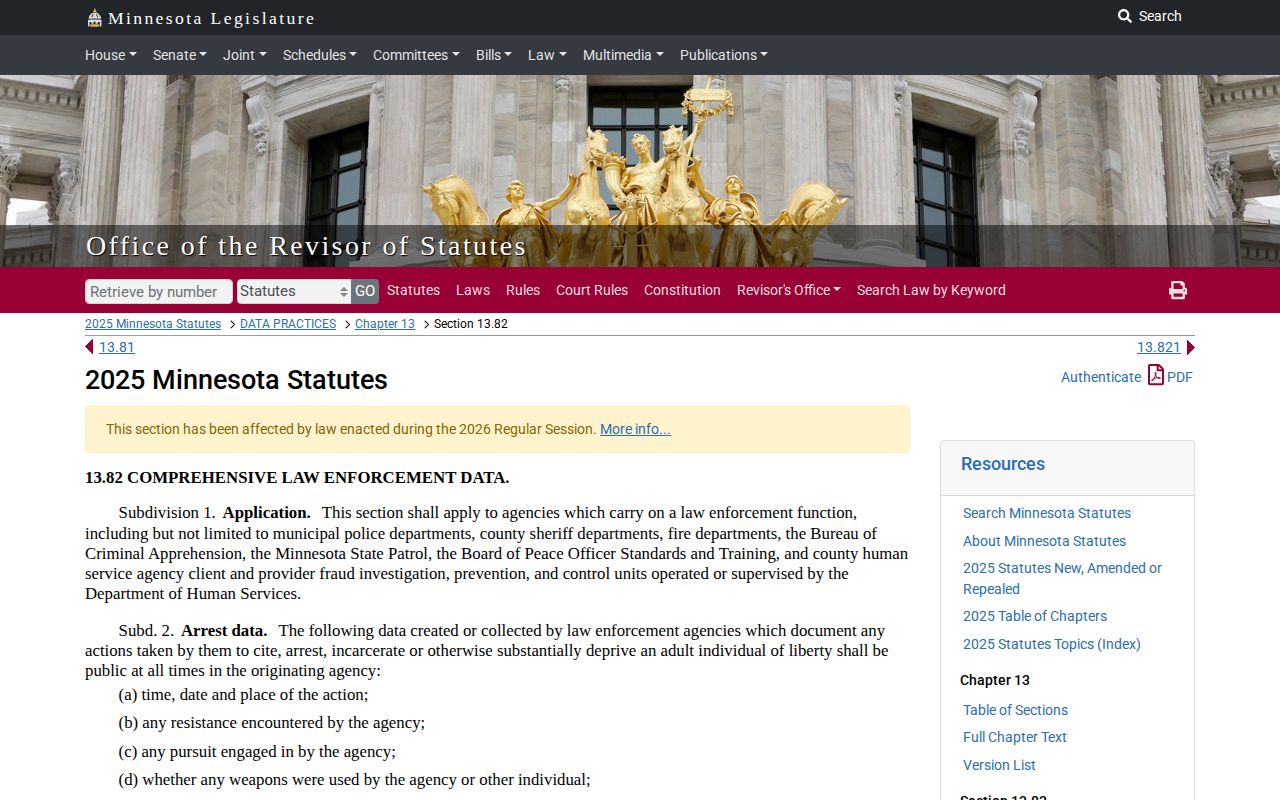
The statute controls classification; an agency webpage is only one access channel.
Grant County Mugshots and Arrests
An arrest in Grant County does not always come with a public booking photo. The county hosts no mugshot gallery online. The sheriff's office publishes no photo roster either. When a photo is taken at intake, the jail that processed the arrest usually holds it. Call the sheriff first and ask whether a copy exists. If the office does not have it, ask which facility handled the booking. Wisconsin's public records law, Section 19.32, generally treats a booking photograph as open, though an active investigation can pause release and other protections may apply.
One third-party site covers the county by name: Mugshots.com's Grant County, Minnesota section. It has no ties to the county or state. Entries there can be stale, incomplete, or simply wrong, so treat any republished photo as a lead rather than proof of anything. Watch for mix-ups too. Search results often surface Grant Counties in Kentucky or Wisconsin. Before trusting a match, compare the state abbreviation, county seat, agency name, phone number, and facility listed.
Note: that unofficial listing documents only what exists online, so weigh it against sheriff, jail, and court records.
Minnesota Arrest Law and Removal
Fixing a record starts at the source. If a sheriff or jail entry is wrong, point out the exact field. Send supporting documents to the agency that keeps it. Court errors follow the court's own correction process. Search engines and republication sites never control Minnesota's original record.
Minnesota's chapter 609A offers automatic and petition-based expungement in qualifying cases. Expungement seals records from public view. It does not destroy every copy. Official petition and notice materials appear in the Minnesota Judicial Branch expungement forms packet. Eligibility and effect hinge on the case, so follow the court's instructions.
For a stale third-party page, finish the official route first and keep certified documents. The publisher states that correction and removal requests can be filed free. Free filing requires proof of the claim. Private policies can change. Never pay a caller who promises guaranteed deletion. Hold back identity documents until you know the recipient is legitimate. The publisher's stated maintenance policy spells out its document process.
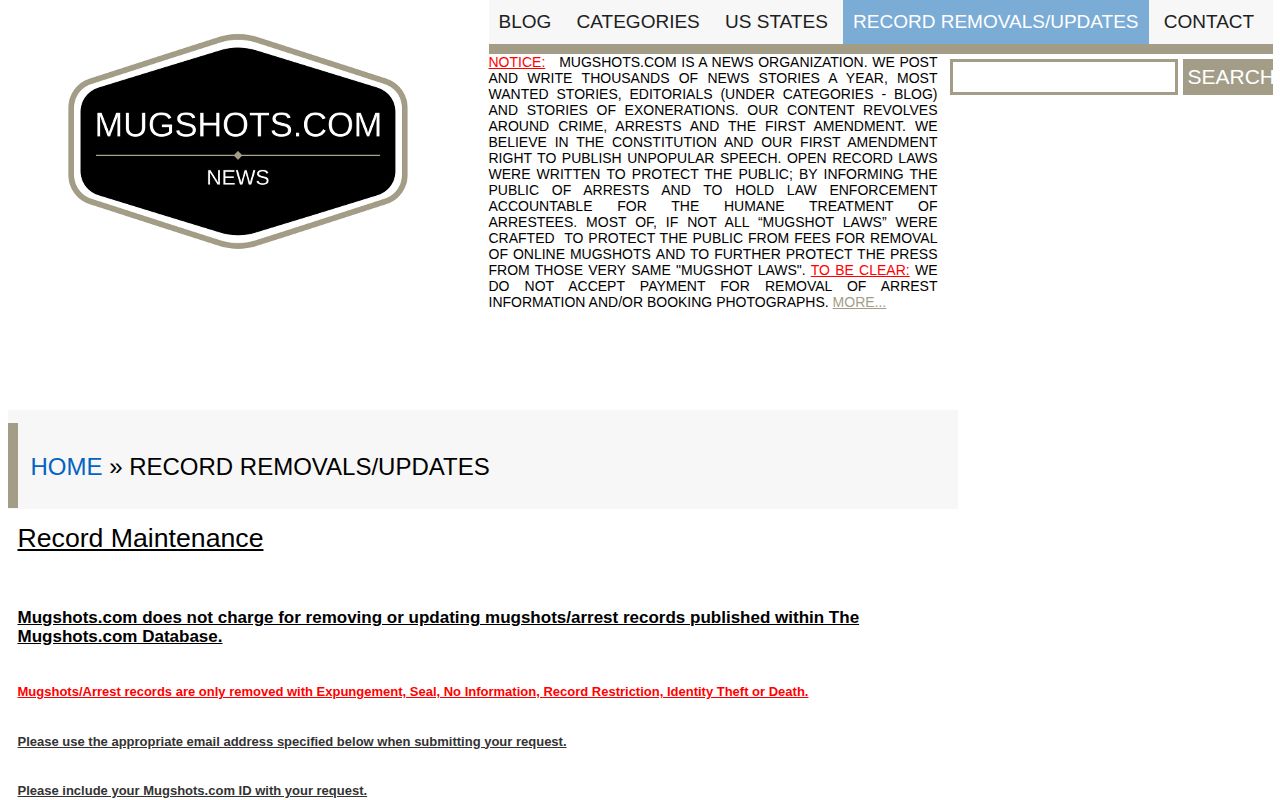
The capture documents a private policy, not Minnesota law or a promised result.
Grant County Arrest Warrants
Grant County posts no official warrant list online. That does not mean no warrant exists. Minnesota Statutes section 13.82, subdivision 19, limits when warrant-index data becomes public unless an agency chooses to publish it. Search-engine lists and similarly named counties make poor stand-ins.
For a personal concern, call the Grant County Sheriff, Grant County District Court, or an attorney and ask how to confirm and resolve the matter safely. Never approach a wanted person yourself. Emergencies belong with 911. Nonemergency tips can reach the sheriff at 218-685-8280. A case number, citation number, or exact identity details make an official check more precise.
Can an empty warrant search prove there is no warrant? No. No Grant County portal exists, statutory timing shapes public index data, and sources lag. Only the responsible agency or court can confirm status.
Grant Arrests and Court Outcomes
The Minnesota Court Records Online system handles case, document, hearing, and judgment searches. It is not a same-day booking feed. Its FAQ notes that a pending criminal case will not surface through a defendant-name search. That limit stays in place until conviction. An empty result cannot disprove a recent arrest. Try a known case or citation number. The Grant County court calendar and court administration offer other angles when public rules allow. The official MCRO FAQ lists that name-search limit and other reasons results can be missing.
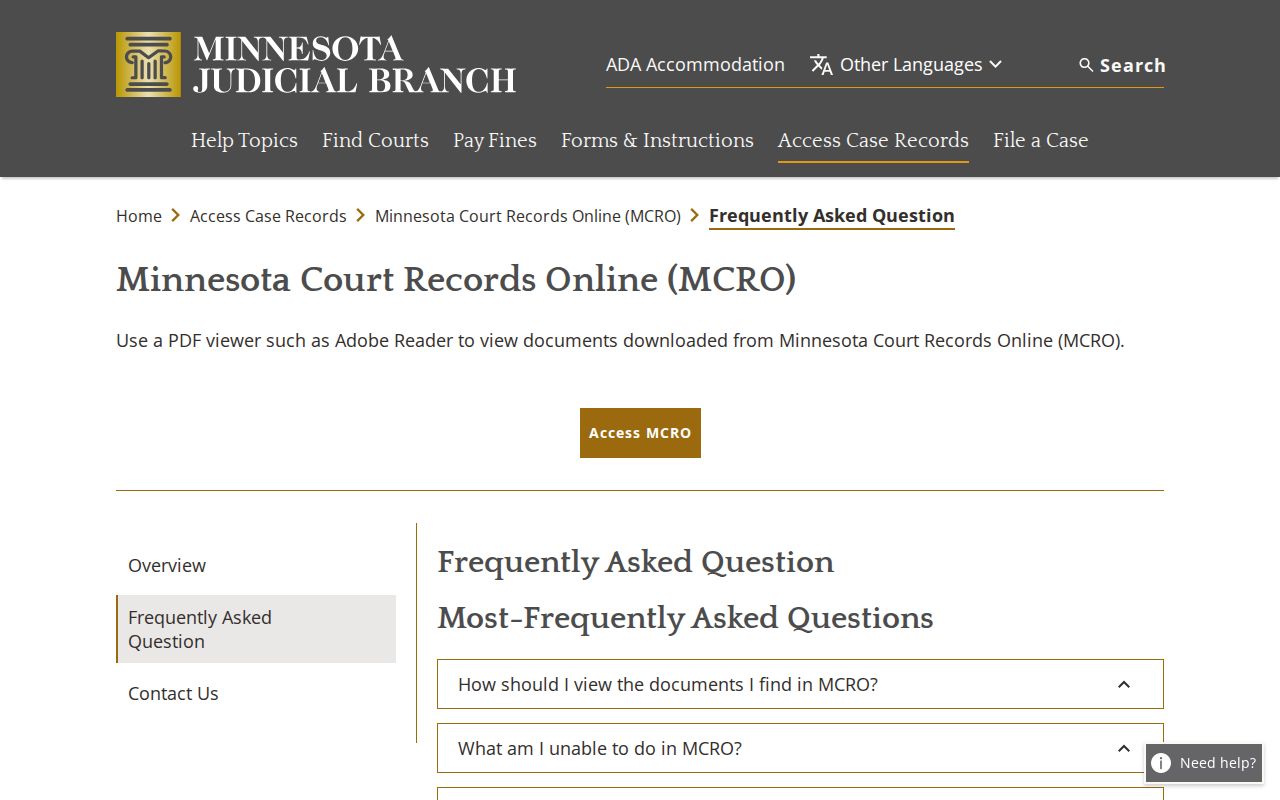
The limitation is why court search and arrest-record search remain separate steps.
- Booking
- Intake at a jail after arrest.
- Arraignment
- An early court appearance addressing charges and possible release terms.
- Bond
- Terms or money set to secure court appearance.
- Disposition
- The final outcome, such as dismissal, acquittal, plea, or conviction.
- Expungement
- A statutory or court process that seals qualifying records.
Grant County Arrest Activity Reports
The Grant County Herald keeps a local arrest chronicle that the county's own site no longer offers as a live feed. Its Sheriff's Office Activity Reports run weekly. Each entry lists the date, time, call type, community, and the action reported. That detail helps a reader locate an event in Elbow Lake, Hoffman, Ashby, or another Grant County community after the day has passed. The format has limits. No booking record or roster entry appears there. The column shows events only as the sheriff logged them.
The gap matters. A reported call is not always an arrest. An arrest named in the paper does not prove intake at a particular jail. Timing lags too, since items can run days after the covered week. Editorial selection can leave events out. Use the Grant County Herald news archive as a secondary discovery source, then ask the sheriff for the official arrest data and the receiving facility's name. Current status belongs to the custodian.
Do not turn weekly place names into arrest-rate claims. Elbow Lake, Hoffman, and Ashby appear for navigation only. Selection came from cited 2020 Census population. The state jail study measures crime incidents differently, so neither set of figures ranks the towns by arrests or danger. For a request beyond the published window, give the sheriff exact dates, places, event types, and any report number from the Herald. Minnesota records rules may keep official material after an online item rolls off. The retention schedule controls access.
Note: The Herald offers chronology and context, while the Grant County Sheriff remains the source for complete, official arrest records.
Grant County Custody Alerts
Minnesota VINE handles custody notifications, not arrest lists. Once a connected county jail enters a person, it can report status, facility, booking, release, or transfer details. Participation by every Grant County transport is not guaranteed. Search helps only after the receiving facility is known. A fresh arrest may not appear until intake wraps up.
The official fact sheet allows registration by phone number or email with a four-digit PIN. A name and account are optional. Keep the PIN to manage or stop notifications. Grant County's CivicEngage "Notify Me" tool covers general county website updates. It is not a booking app and will not send arrest or release alerts.
Recent Arrests by Grant City
The city pages follow the three largest incorporated places in the cited 2020 Census source. Population sets navigation order only. It does not measure arrests, incidents, or safety. Sheriff coverage and outside transport mean a city name often marks the event location rather than the booking custodian.
- Elbow Lake Recent Arrests: the city’s current contact page directs law-enforcement needs to the Grant County Sheriff.
- Hoffman Recent Arrests: county resources identify sheriff coverage, with no verified municipal feed.
- Ashby Recent Arrests: lookup begins with the sheriff, then follows the confirmed receiving facility.
Barrett, Herman, Norcross, and Wendell remain in play. They sit inside the county search area. They get no pages of their own here. For any community or township outside the top-three map, confirm the originating agency, because the nearest city may not have made the arrest or hold the booking.
After Grant County Custody
State custody works differently. The Minnesota DOC public offender viewer applies after a state sentence or during DOC supervision. It is not a county arrest roster. The viewer lists offender ID, name, birth date, status, facility, sentence and release details, highest offense, and court files. No booking photo appears there. Minnesota Haven handles victim notification for DOC custody and supervision, while VINE tracks connected county-jail custody.
Federal custody needs its own tools. The Bureau of Prisons locator covers federal incarceration. It reaches back to 1982 and reports identity, register number, location, and release information, not a Grant County booking feed. The ICE locator handles immigration custody. It uses an A-number plus country of birth or exact biographical details, and a missing result proves little because entry can lag and some records stay withheld. County searches should not jump to federal tools unless an arrest record points there.
Grant County Sheriff’s Office Location and Directions
Public Record Search
Sponsored Results