
Grant County's Multi-Day Reporting Trail
No agency here publishes a rolling arrest log. There is no 72-hour list, no seven-day booking table, and no date-filtered blotter on any Grant County government site. The trail runs through weekly Herald public-notice PDFs instead. Examples include issues covering February 2 through 8, 2023 and June 22 through 28, 2023. Those show the report format. They are not a current list, and some arrests may never appear at all.
When individual PDF links shift, the Grant County Herald news category is the durable entry point. Jot down the issue date, the dates covered, and the date you accessed it. A newspaper archive is not a jail roster, so treat it accordingly.
How to Read the Grant County Blotter
Work issue by issue and week by week. Do not assume a rolling database exists. The report can help you locate an event, but only the official record holds the full arrest and custody chain.
- Open the Herald news or public-notice issue closest to the event date.
- Find the Sheriff's Office Activity Report and note its covered date range.
- Read the event time, call or incident type, place, and stated action without adding conclusions.
- Write down the issue date and exact PDF address so the citation can be checked later.
- Call the sheriff at 218-685-8280 and request the incident number and originating-agency record.
- Ask which outside facility received the person if a booking or custody record is needed.
For something that happened today, start with Arrests Last 24 Hours, since a weekly paper may not have published it yet. Confirm the agency and the receiving facility first.
Fields in a Grant County Activity Report
The newspaper reports give you incident chronology, not the field set of an official arrest or jail record. Read every field with that narrower purpose in mind.
| Report element | What it can and cannot establish |
|---|---|
| Covered week | Defines the report period, not a live rolling window. |
| Event date and time | Places the reported activity in sequence; it may not equal booking time. |
| Call or incident type | Describes the report category, not a final court finding. |
| City, township, or place | Locates an event but does not prove which agency booked a person. |
| Action or short narrative | Summarizes reported activity and may omit important context. |
| Booking number | Not verified in the reviewed format. |
| Current custody or release | Not supplied as a dependable live field. |
| Booking photograph | Not shown in the reviewed report excerpts. |
Note: A news report can identify a lead, but only the originating agency and receiving jail can authenticate their respective records.
Weekly Reports Preserve Local Context
The Herald's real strength is sequence and place. Weekly reports preserve community names and short actions. That longevity outlasts any live page rolling forward. They come in handy for reconstructing a week. Grant County posts no local jail roster, after all. It does not make the paper a booking custodian. The February 15, 2023 issue carried the report for February 2 through 8. The July 5, 2023 issue covered June 22 through 28. It included DWI and warrant-service activity. Treat old issues as format examples, not as recent arrest results. Fergus Now runs occasional regional incident stories, but it is no complete blotter. For geography, the official Grant County GIS legend is a reminder. Agency labels need context.
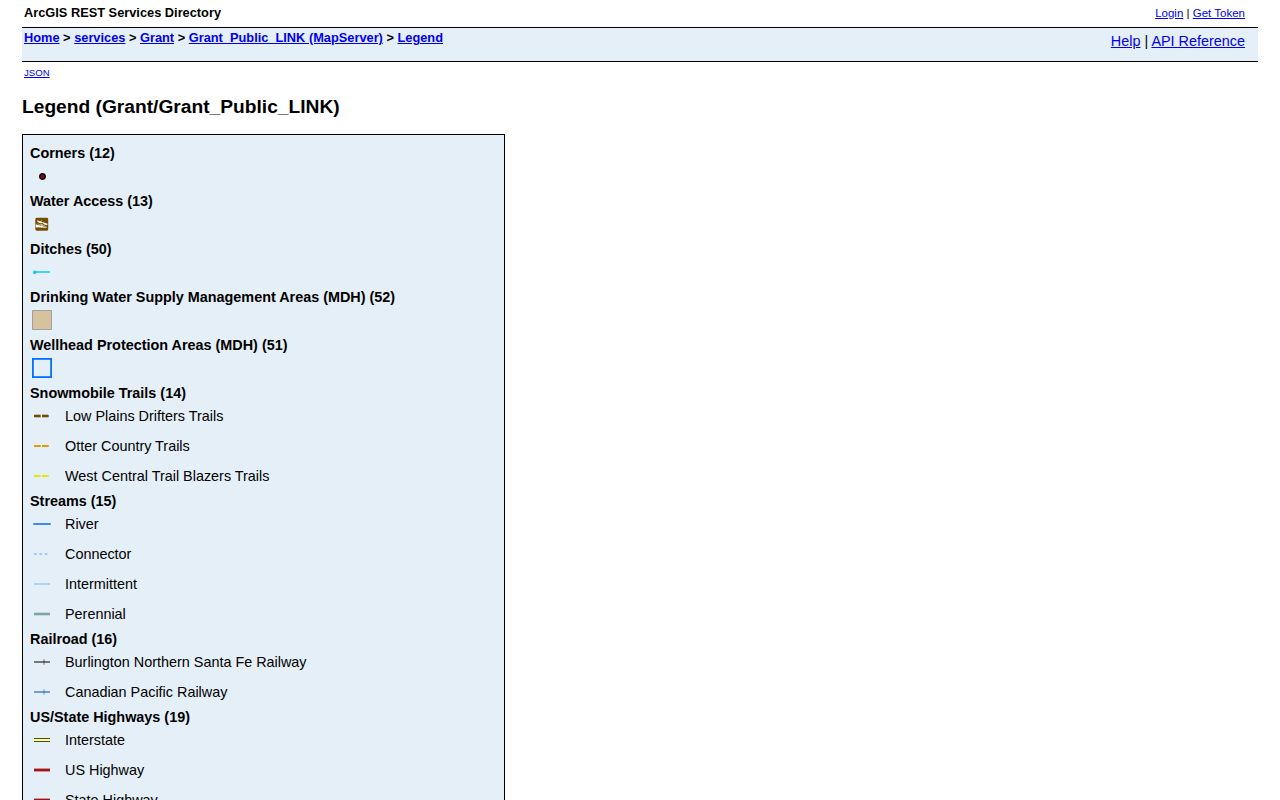
The legend names law-enforcement map layers. It publishes no arrests, and it cannot tell you which office holds a given incident record.
Weekend and Holiday Blotter Gaps
Grant County publishes no weekend catch-up schedule. There is no holiday surge rule. No stated posting cadence exists anywhere official. A weekly report naturally lands after some events it describes. That delay does not prove arrests made on weekends sit in a Monday batch. Never promise a timing pattern unless a current publisher statement backs it.
A missing entry can mean several things. The event may fall outside the covered dates, may not have been selected, or may have used different wording. It may simply never have entered the digest. None of that proves no arrest occurred. Check the issues on both sides, then request the official record by a narrow date range.
Grant County Records Beyond the Blotter
The county Public Data Request Policy is the route past the newspaper window. Ask for existing arrest reports over a defined period. Request the incident number, arrest date, and place. Then ask for public adult fields, legal basis as maintained, arresting agency, holding facility, transfer recipient, and release information. Grant County has no jail. So the sheriff may point you to an outside custodian for the booking portion.
The policy is clear on one point. The county need not build a new weekly list or reshape data it does not keep. Public data get handled as soon as reasonably possible. Summary-data requests follow a described ten-business-day response framework. Inspect first to narrow scope before ordering copies. Search, retrieval, electronic-delivery, and vendor costs may apply, so request an estimate.
Minnesota records rules require agencies to preserve official records. Disposal happens only on approved schedules. A vanished webpage does not mean the record was destroyed. Ask both the sheriff and the receiving jail for the schedule. Request the series, date range, and destruction date too. Old jail registers and arrest dockets can carry archival value. No Grant-specific transferred collection is known.
Population Is Not Arrest Volume
Elbow Lake, Hoffman, and Ashby sit in the city navigation because the 2020 Census counted them. It was not because of their arrest numbers. Population says nothing about bookings. The DOC jail study does include reported-crime incident figures, yet incidents are not arrests either. No Grant County community can be ranked safer or more arrest-prone on that evidence. Honest trend analysis needs a consistent official dataset with clear definitions, a fixed date span, and deduplication. The Herald weekly archive supplies none of that.
The no-jail structure compounds the problem. A single Grant County arrest can leave traces with the sheriff, a receiving facility, and the court. All of this happens at once. One incident report, meanwhile, might describe a call that never ended in a booking. Converting a digest into booking totals simply does not work.
Court Context for Grant County Arrests
The Minnesota Court Records Online FAQ flags a gap worth knowing. A pending criminal matter stays invisible to defendant-name searches. That lasts until conviction. Case, document, hearing, and judgment searches each reach different material. So an empty name result proves nothing. It tells you nothing about a Grant County arrest in a weekly digest.
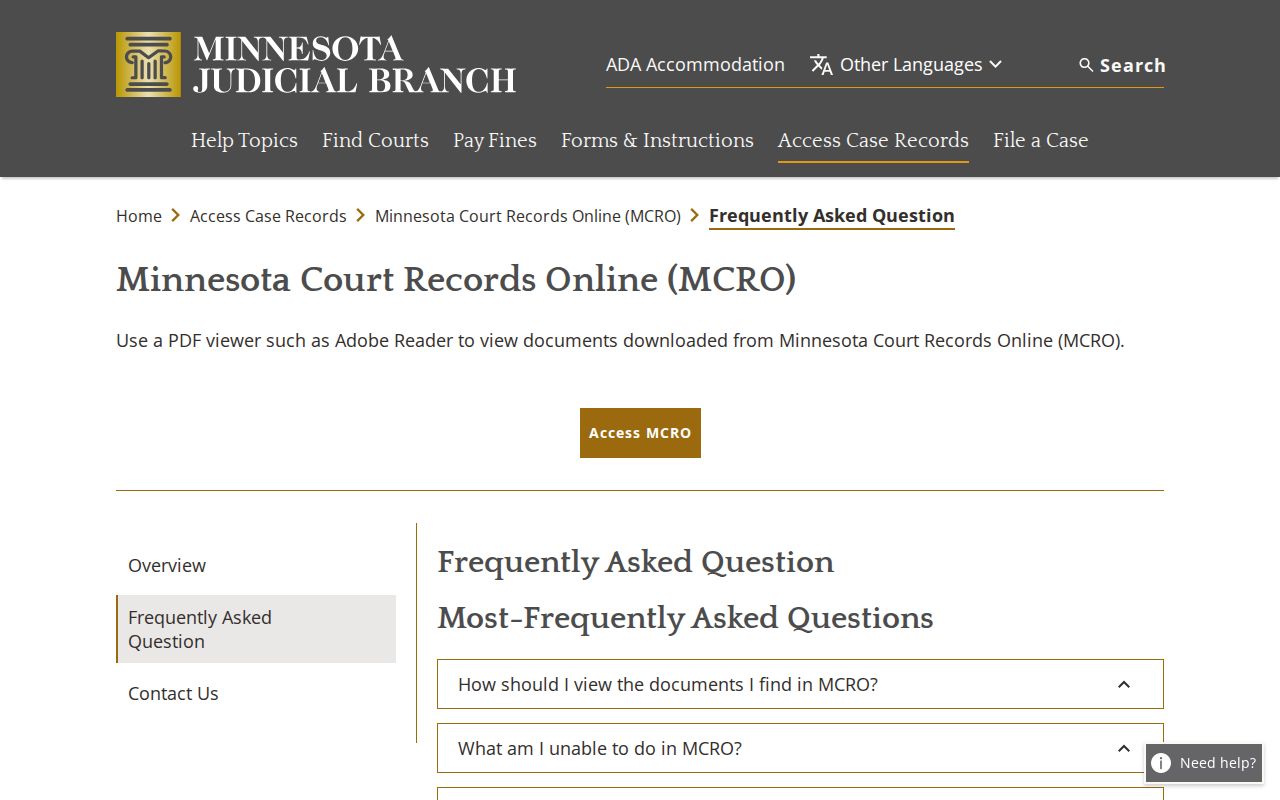
Court guidance points to a better path. An incident date, report number, citation, or court file number often beats a broad name search. That works well for Grant County arrests. Later court records matter too. A case may show amendment, dismissal, diversion, acquittal, stay, conviction, or expungement.
Older events deserve three saved dates. Save the incident, the newspaper issue, and the moment the official record was pulled. Two accurate sources can still disagree, and those dates explain why. Keep the place wording intact as well. A city or township marks location, not the arresting office or the booking jail. Because Grant County runs no jail, transport details anchor the whole record chain.
When a report disappears online, request the retention schedule before assuming destruction. Minnesota archival guidance treats jail registers and arrest dockets as potentially valuable series. No Grant-specific online archive exists. Ask the sheriff and the receiving facility. Find out whether each holds, transferred, or lawfully disposed of the series in question.